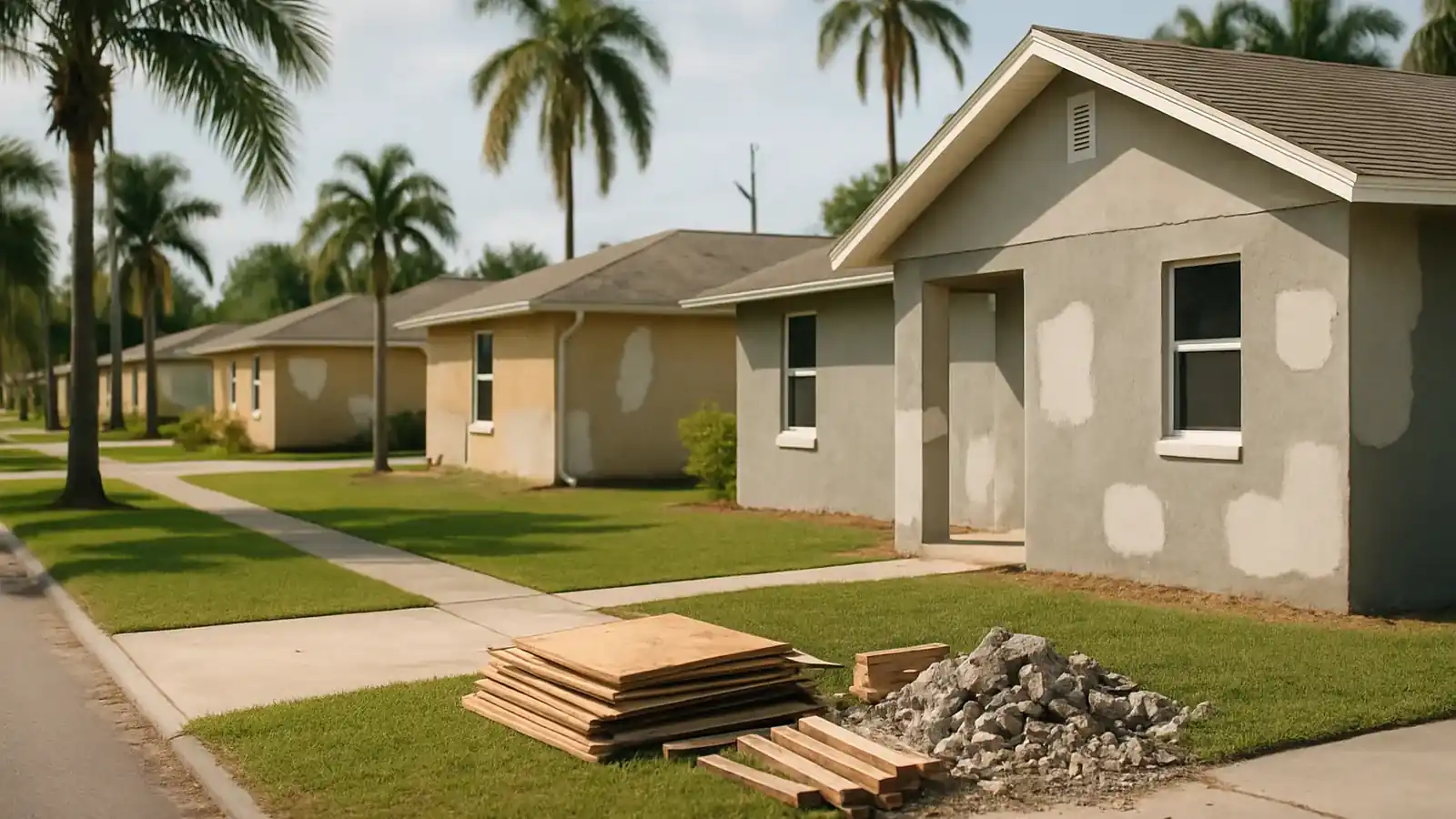
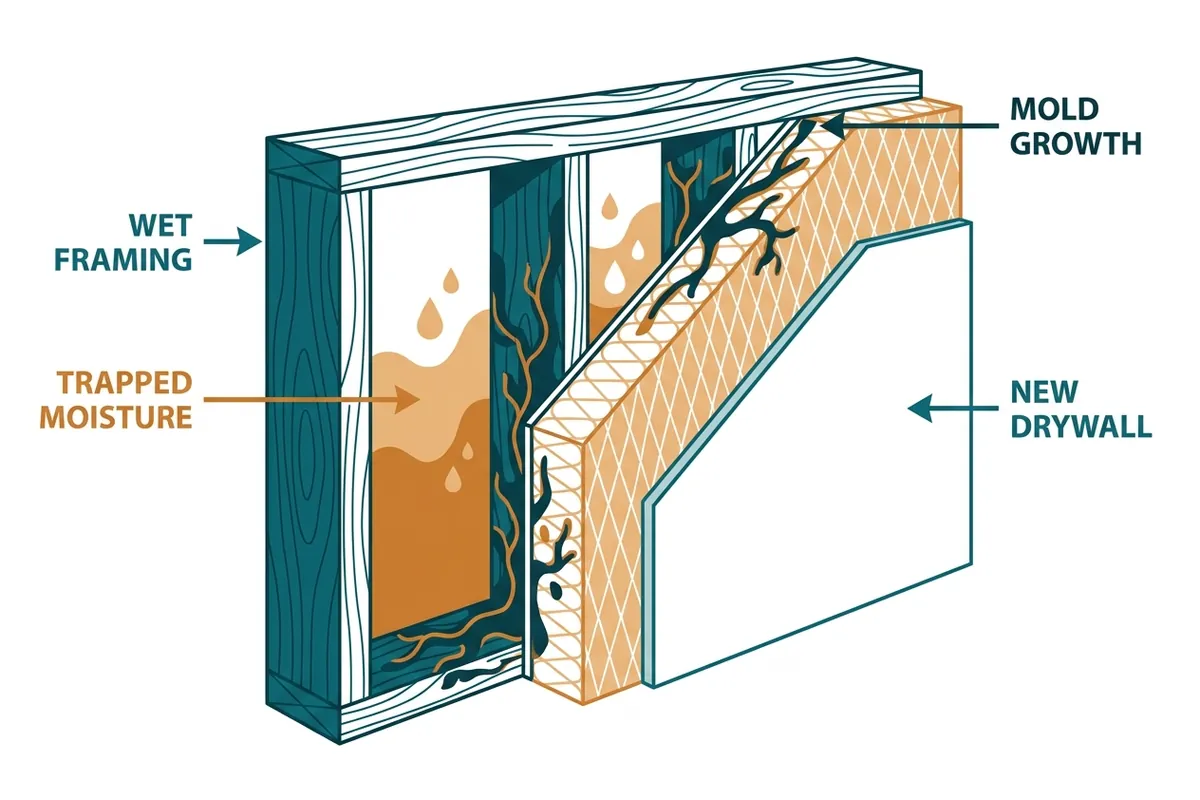
Mold remediation in Fort Myers costs $500–$6,000 for most residential jobs, set by area affected and whether materials come out. The work is containment, physical removal, and HEPA filtration, plus correcting the moisture, which here is either ambient humidity or water sealed into a rebuilt assembly.
Here's what proper remediation involves, and what's different about opening a wall that was already repaired.
The standard, in the order it happens
- Find and stop the moisture. Ambient humidity, an active leak, or water trapped during reconstruction. Nothing else matters until this is identified.
- Contain the area. Barriers plus negative air pressure, so removal doesn't distribute spores through the rest of the house.
- Remove what can't be cleaned. Porous material that grew mold comes out. Non-porous surfaces get cleaned.
- HEPA-filter and clean. Air scrubbers run through the work and after it; surfaces are HEPA vacuumed and wiped.
- Dry to a measured target. Meters decide when materials are ready to be closed, not the calendar.
- Rebuild. Only once the readings allow it.
Removal, not treatment
The distinction that separates real remediation from an expensive imitation. EPA guidance is direct: the job is physically removing the mold and the porous material it colonized. Because mold doesn't have to be alive to cause a problem, killing it and leaving it in place doesn't complete anything.
So a company proposing to fog the house, spray an antimicrobial, or run an ozone generator instead of opening the affected assembly is selling a service that will not resolve the situation. Those tools have narrow legitimate uses on surfaces that have already been cleaned. None of them replaces removal, and a bid organized around them deserves scrutiny.
Opening a wall that was already repaired once
This is the situation this market produces more than any other, and it deserves its own approach. When growth is inside an assembly that was rebuilt after storm damage, the homeowner is being asked to undo work they already paid for, sometimes work they fought to get scheduled. A good remediator takes that seriously in three ways.
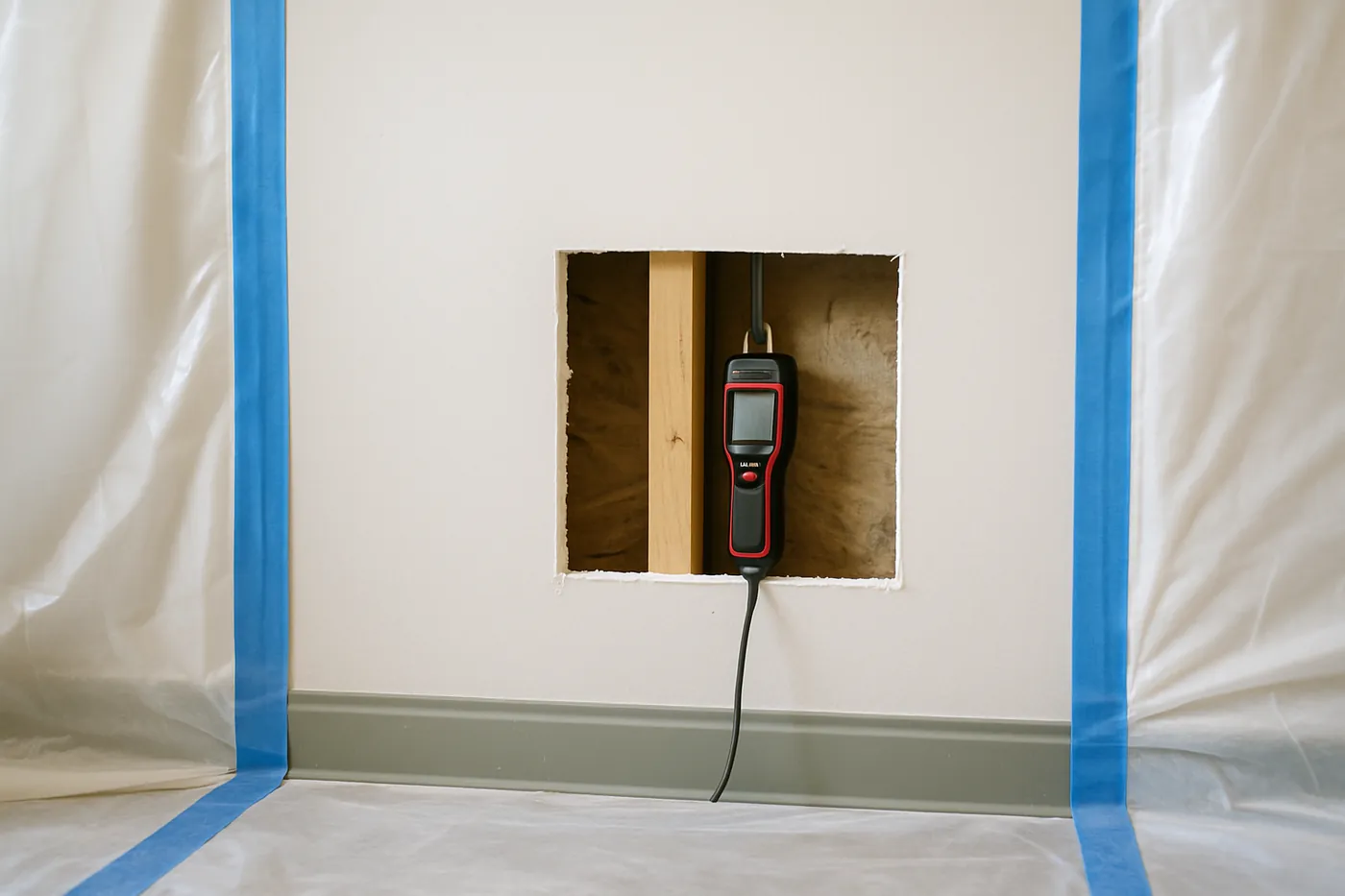
First, they locate before they open. Moisture meters and thermal imaging define the wet area, so the cut is targeted. Second, they show you the readings that justify each opening before anything is touched. Third, they document what they find: photographs of the cavity, moisture content of the framing, and the condition of the insulation, because if a rebuild was closed over wet material, that record matters to you well beyond the remediation itself.
What drives the price
- Area affected: measured, not estimated from a doorway
- Material removal and rebuild: frequently the largest line, and the usual reason a low bid grows mid-job
- Containment complexity: open plans need more barrier than closed rooms
- Access: wall cavities, chases, and under-cabinet voids cost more to reach than open surfaces
- The moisture correction: priced separately and visibly, because it's what decides whether this is a one-time job
What actually drives the price?
Post-Ian reconstruction gave Fort Myers a specific remediation pattern: growth behind new finishes, in houses that look fine, priced by what has to be reopened.
| Situation | What it means | The local multiplier |
|---|---|---|
| How far it spread | Square footage sets the containment and the labour | Spread behind fresh drywall counts even though nobody can see it yet |
| What it grew into | Drywall and insulation leave; framing cleans in place | Reconstruction-era insulation that went in over damp framing leaves again |
| Where it lives | Wall cavities and chases cost more than open surfaces | Block construction concentrates the work in furring strips and interior finishes |
| Whether the water is fixed | Remediation over an unfixed source is rework with a date on it | If the roof or envelope repair failed, remediation waits for it, or repeats |
Most residential work here runs $500-$6,000 by spread. Rebuilt-then-remediated is the expensive sequence; the inspection that prevents it is the cheapest line on this page.
Remediation questions, straight answers
What does mold remediation cost in Fort Myers?
Most residential jobs run $500 to $6,000, set by area affected, whether materials must be removed and rebuilt, and how much containment the layout needs. Growth confined to one wall is the low end; growth found inside rebuilt assemblies across several rooms is the high end. Many local specialists don't charge for the inspection producing the number; ask when they call.
Will walls we just had repaired have to come open?
Only where the readings justify it, and a good remediator shows you the readings first. Moisture meters and thermal imaging locate the wet area so the opening is targeted rather than exploratory, often a single cut rather than a room. Nobody wants to undo a repair, and it should not be recommended on suspicion alone.
Do we need to move out during the work?
Usually not. Containment with negative air pressure exists specifically so the rest of the house stays usable while one area is worked. Where the affected area is large, includes the only bathroom, or someone in the household has a respiratory condition, a good remediator will say plainly that staying elsewhere is the better call.
Is fogging or chemical treatment enough?
Not as a substitute for removal. EPA guidance is that remediation means physically removing the growth and the porous material it colonized. Mold doesn't need to be alive to cause a problem, so killing it in place doesn't finish the job. Any bid built around fogging or ozone instead of removal is selling something that won't resolve this.
Will it come back?
Not if the moisture source is corrected, and that line should stay visible on the scope. Growth from ambient humidity returns unless the house holds under about 60 percent relative humidity. Growth from a sealed wet cavity doesn't return once the cavity is opened, dried to a standard, and rebuilt properly.
Get a Fort Myers mold inspection
Tell us what you’re seeing or smelling: a musty room, staining on a wall base, discoloration in the AC closet, humidity that never drops, and we’ll pass it to one independent local specialist who works in Fort Myers. That specialist will call you back about an inspection.