
AC and duct mold cleanup in Fort Myers runs $600–$3,500 depending on whether the work covers the air handler and coil alone or the duct system as well. Evaporator coils are wet by design, which makes the air handler the most common hidden mold location in Florida homes.
Here's how the system grows it, and why the humidity setting matters more than the cleaning.
A wet box that distributes air through the whole house
Dehumidification happens by condensation: humid air crosses a cold evaporator coil, water condenses out of it, and drains away. That's the design working correctly, and it's why the inside of an air handler is routinely wet.
Wet, dark, and dusty is a growth environment. A clogged drain pan or a condensate line without proper slope leaves standing water in the cabinet. A fouled coil supplies the dust. And unlike growth in a closet, anything living here sits upstream of every supply register. The system distributes it by design, which is why the smell shows up in multiple rooms at once.
Construction dust is its own problem
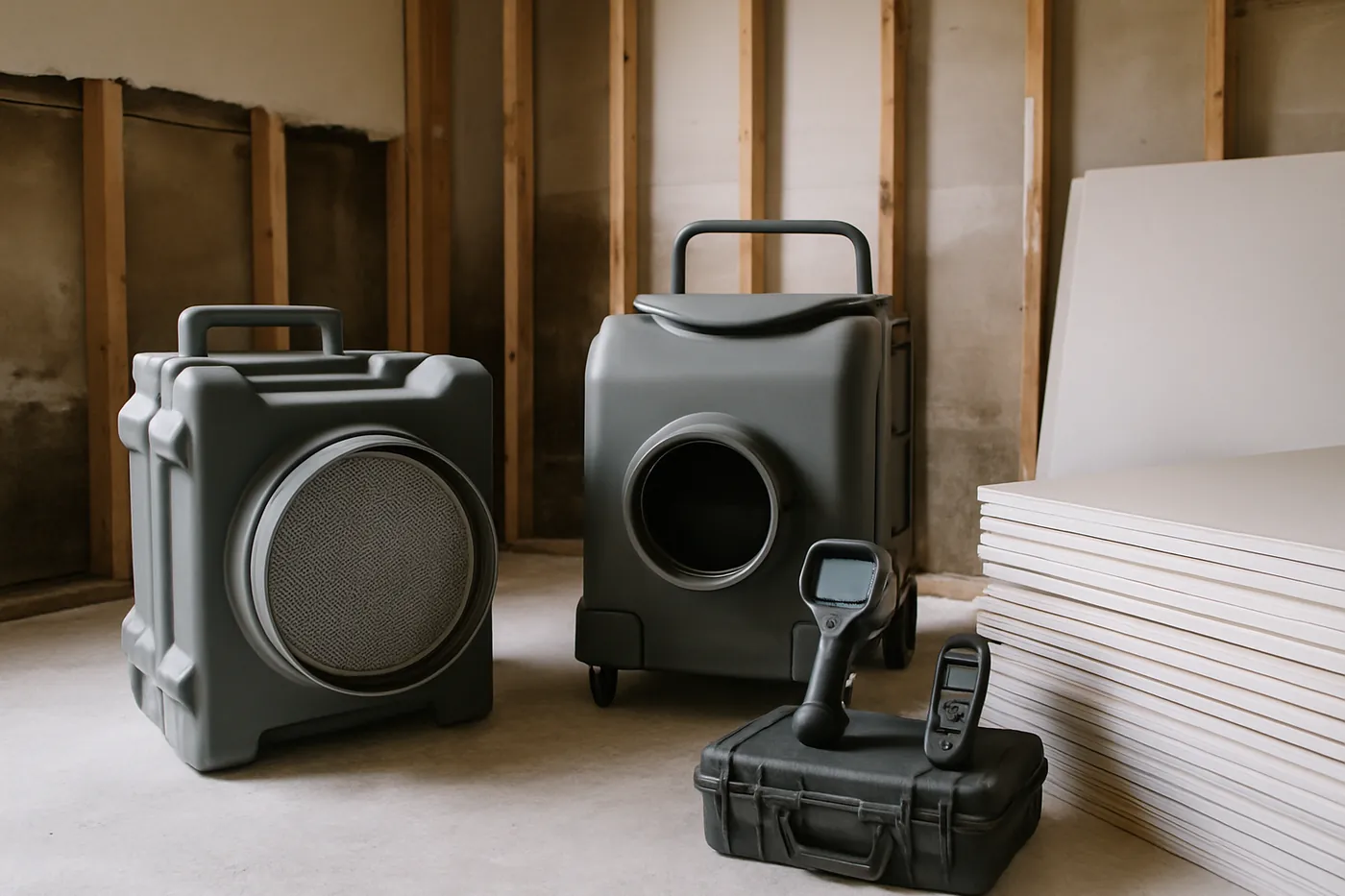
Homes that went through reconstruction carry an additional burden most owners never think about. Drywall dust, sawdust, and demolition debris get pulled into return air during the work, and unless the system was properly protected and the ducts cleaned afterward, that material stays in the ductwork and the air handler. It is an excellent food source sitting in a location that is periodically wet.
This is one of the few situations where duct cleaning is straightforwardly justified. If your system ran during or shortly after construction work, it's worth inspecting on that basis alone, and a good inspection will tell you if it's clean.
How do I know it is the AC and not the room?
Timing is the tell. Why does the smell arrive a few seconds after the system starts and fade when it stops? Because the source is inside the equipment or the duct rather than in the room around you.
These are the signs you are looking at an equipment problem: allergies worse indoors with the air running than outdoors, dark specks appearing at the supply registers, staining on the ceiling around a vent, water standing near the air handler, and a system that has started short-cycling. Notice two together and the equipment is usually the source.
What causes it here is almost always a blocked condensate drain, a leaking return pulling unconditioned air in, or equipment oversized for the house. Standing water at the air handler is the one to treat as an emergency rather than a seasonal nuisance. A blocked drain keeps filling and the damage moves into the platform and the floor.
What the cleanup covers
- Air handler cabinet, blower, and evaporator coil: cleaned, not fogged
- Drain pan and condensate line: cleared and checked for slope, since standing water restarts everything
- Return plenum and filter housing: commonly skipped and commonly contaminated
- Ductwork where inspection shows actual contamination or documented construction exposure
- Insulated flex duct assessed for replacement where the interior lining is affected, because lined duct can't always be cleaned successfully
Cool and damp: the failure mode nobody names
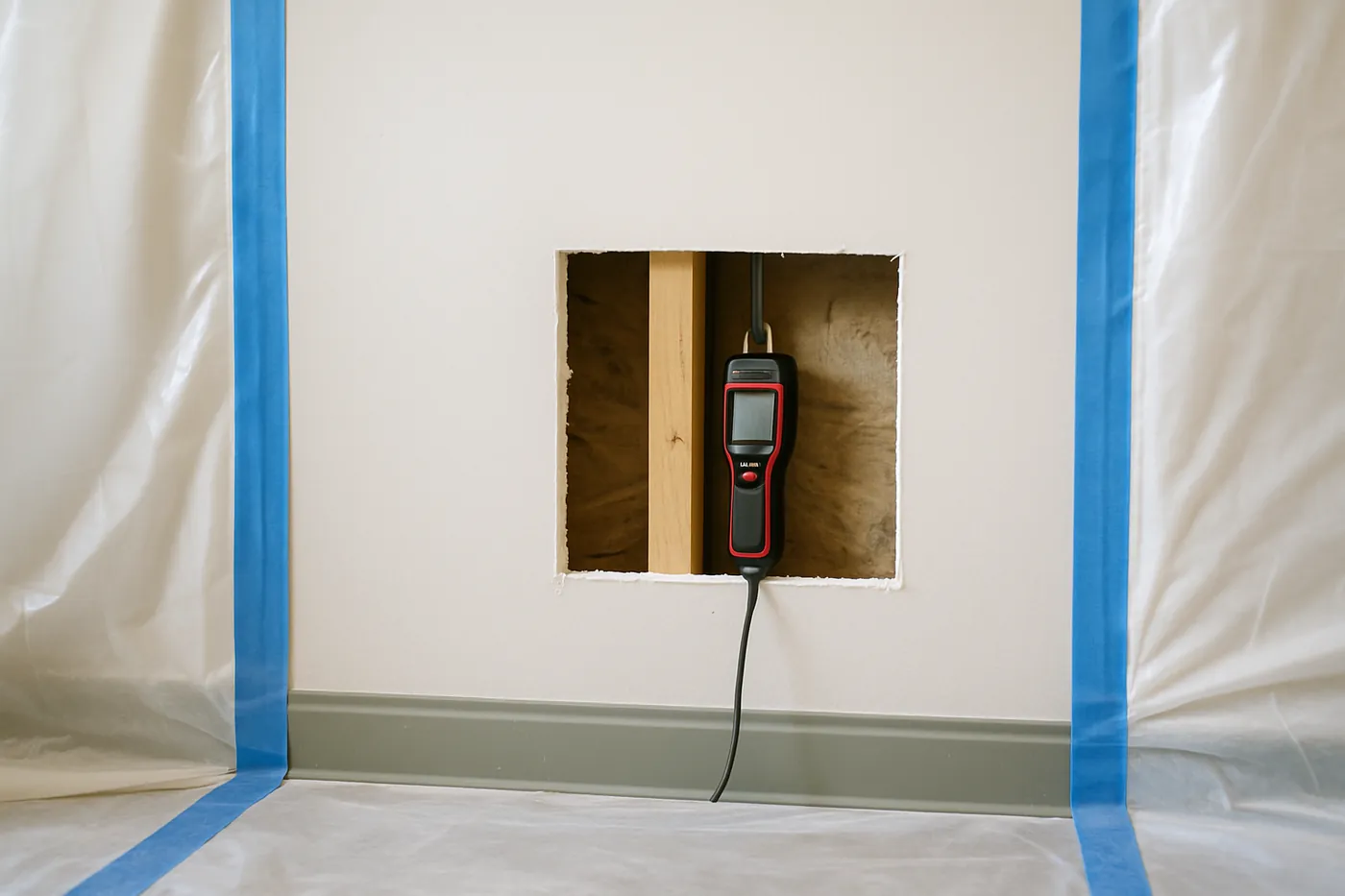
Your air conditioner removes moisture only while it runs. A correctly sized unit runs long, steady cycles and pulls a great deal of water from the air. An oversized unit cools quickly, satisfies the thermostat, and shuts down having removed much less.
That leaves a house at 74 degrees and 66 percent relative humidity. It feels comfortable, so nobody investigates, and it sits above the roughly 60 percent threshold where growth is largely arrested. The fix is usually the least expensive line on a scope. A dehumidifier that runs independently of the cooling call, a humidistat, or a thermostat strategy favoring longer cycles, and it's the line that determines whether the remediation you paid for stays finished.
What is the system telling you?
In Fort Myers the air conditioner runs ten months a year, which makes it both the humidity control and (when something is wrong inside it) the distribution system for the problem.
| Situation | What it means | The local pattern |
|---|---|---|
| Smell arrives on start-up | The source rides the airflow: equipment or duct | Ten months of runtime means start-up smells get many daily repetitions: easy to date |
| Smell constant, system off | The room, not the machine. Find the moisture source | With the system almost always on, a constant smell usually still implicates the ducts |
| Dark specks at supply registers | Growth downstream of the coil, usually duct or boot | Wet-season condensation feeds boots and flex runs above the ceiling |
| Water standing at the handler | A blocked condensate line: urgent, not seasonal | Standing water at the handler in this climate can flood a closet in a weekend |
Equipment sized after Ian-era rebuilds is sometimes generous for the house it serves; a system that satisfies the thermostat too quickly leaves the humidity for the ducts to wear.
AC and duct questions, straight answers
Can mold grow inside my air conditioner?
It's among the most reliable places for it in Florida. The evaporator coil is wet by design (condensation is how the system dehumidifies) inside a dark cabinet moving air through the whole house, with dust available as a food source. That's why a musty smell arriving from the vents should rank higher than a musty smell in one room.
How do I tell if the smell is the AC?
The pattern gives it away. If the odor appears or strengthens within a minute of the system starting, comes from supply registers, and shows up in several rooms at once rather than one, the system is the likely source. A single musty room is usually that room, not the equipment.
Is duct cleaning worth paying for?
Only with a reason. Routine duct cleaning on a system showing no contamination has limited demonstrated benefit and EPA doesn't recommend it as maintenance. Duct cleaning after documented mold growth, water intrusion, or heavy construction dust (which describes a lot of homes here) is a different proposition and is warranted.
Our house is cool but feels damp. What's wrong?
Cooling and dehumidifying are separate outcomes, and the second only happens while the system runs. An oversized unit hits the setpoint fast and shuts off having removed little moisture, leaving 74 degrees at 66 percent humidity. It feels fine and it's above the threshold where growth is arrested.
Would a dehumidifier solve it?
Frequently, and it's usually the cheapest correction on a scope. A standalone or whole-home dehumidifier removes moisture regardless of whether cooling is being called for, which closes exactly the gap an oversized system leaves. The target is holding indoor relative humidity under about 60 percent year-round.
Get a Fort Myers mold inspection
Tell us what you’re seeing or smelling: a musty room, staining on a wall base, discoloration in the AC closet, humidity that never drops, and we’ll pass it to one independent local specialist who works in Fort Myers. That specialist will call you back about an inspection.