
Attic mold removal in Fort Myers runs $1,500–$6,000 for most homes, covering HEPA cleaning of the sheathing and correcting the moisture source. The usual cause is warm humid air reaching the attic (bath fans terminating inside, leaking ducts, or unbalanced ventilation) rather than a roof leak.
Here's why attics here grow mold, and what a lasting correction includes.
Attics are where indoor moisture goes to condense
An attic in this climate is a hot, unconditioned volume sitting directly above a cool, conditioned one. Warm moist air rises into it through every available gap: the attic hatch, recessed lights, plumbing and wiring penetrations, and leaking supply and return ducts. Once up there, it meets sheathing that at certain hours is the coolest surface available.
Then there's the direct delivery: a bath fan whose duct terminates in the attic rather than through the roof or soffit. That fan is working exactly as intended, moving saturated air out of the bathroom and depositing it onto plywood several times a day. It's among the most common attic mold causes and among the cheapest to correct.
What the work includes
- HEPA vacuuming and abrasive cleaning of affected sheathing and framing: removal, not treatment
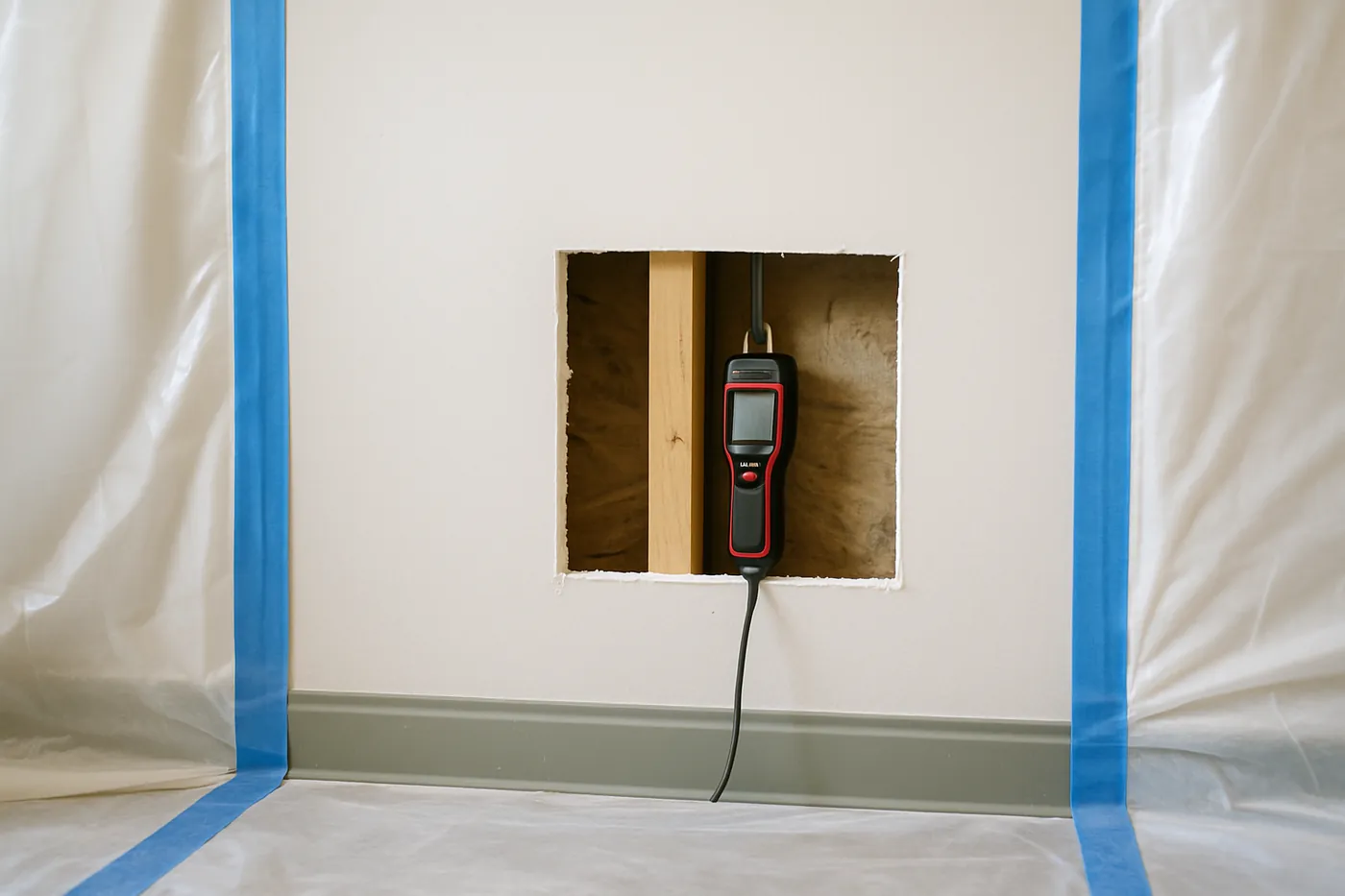
- Containment at the access point, so what comes down doesn't come down into the house
- Insulation removal where contaminated or repeatedly wetted
- Bath and dryer duct correction: terminating outside the building, verified
- Air sealing at the ceiling plane: hatch, penetrations, and fixtures, which cuts the moisture supply from below
- Ventilation balance: soffit intake checked against exhaust rather than assumed
Roof work and what it changed
A great many roofs in this region have been replaced or repaired in recent years, and that's worth raising during an attic inspection. New roofing can change ventilation characteristics, and soffit vents get blocked by insulation or debris during work more often than anyone intends. Where an attic started showing moisture problems after roof work, the ventilation balance is the first thing to check, and the correction is frequently clearing intake rather than adding exhaust.
Adding vents is not automatically the answer
Attic ventilation works as a balanced system: air enters low at the soffit and exits high. Add exhaust without matching intake, or leave soffit vents blocked, and the attic can start drawing its makeup air from the conditioned house below: pulling indoor humidity up with it. That makes the problem worse while looking like a solution. A good scope states what is actually unbalanced and why, and the fix is often clearing intake and sealing the ceiling plane at a fraction of the cost of new roof vents.
What put the mold up there?
A Fort Myers attic spends the wet season hot on top and cold underneath, with the AC ducts running through the hottest air in the house. That geometry is most of the story.
| Situation | What it means | The local version |
|---|---|---|
| A roof penetration | Staining tracks a fastener, a valley, or one flashing | Post-Ian roofs are younger than the metro average, but a missed fastener still leaks |
| Sweating ductwork | Growth clusters along duct runs in a hot attic | The signature local case: cold ducts sweating in a 130-degree attic all summer |
| Blocked intake vents | An even dusting across the sheathing, worst at the eaves | Soffits blocked by blown insulation stop the one airflow the attic design assumed |
| A storm-opened envelope | One bay, datable to a storm or a fallen limb | Storm damage here is datable to a name, and so is the staining it caused |
If the growth maps to the duct runs rather than the roof planes, the fix is insulation and sealing on the ducts, not roof work. Getting that diagnosis right halves the bill.
Attic questions, straight answers
Why is my attic sheathing dark near the edges?
That's where warm moist air meets the coolest surface. Discoloration concentrated near the eaves usually means moisture is reaching the attic and ventilation isn't clearing it: commonly from bath fans terminating inside, duct leakage, or an unsealed attic hatch. The moisture path diagnoses it; color doesn't.
Does a bath fan venting into the attic really cause this?
It's among the most common causes. The fan does its job (moving saturated air out of the bathroom) and if the duct ends in the attic instead of through the roof or soffit, it deposits that moisture onto sheathing several times a day. Correcting the termination is inexpensive and it removes the source.
Can sheathing be cleaned, or does it get replaced?
Usually cleaned. Plywood and OSB with surface growth typically respond to HEPA vacuuming and abrasive cleaning. Replacement is warranted where material has been wet long enough to delaminate or lose structural integrity. A condition a good specialist photographs and shows you rather than asserting from the hatch.
Should we add more vents?
Sometimes, and sometimes adding vents makes it worse. Attic ventilation is a balanced system of soffit intake and high exhaust; adding exhaust without matching intake can pull conditioned air out of the house and draw more humidity up. Blocked soffit vents are extremely common and cheaper to clear than new vents are to install.
Is attic mold a health risk to the living space?
Typically less than it appears, because attics generally sit at negative pressure relative to the conditioned space, so air tends to move up rather than down. That's a reason not to panic, not a reason to leave it. The moisture behind it is also degrading sheathing and insulation performance.
Get a Fort Myers mold inspection
Tell us what you’re seeing or smelling: a musty room, staining on a wall base, discoloration in the AC closet, humidity that never drops, and we’ll pass it to one independent local specialist who works in Fort Myers. That specialist will call you back about an inspection.